Geležinis Šventasis (Sanctus Ferrum)¶
Nature¶
Egregore (Cosmology §2.2): Geležinis Šventasis, Latin Ferrum Sanctum. It is fed by the Reise season, crusade, indulgence and forced baptism, and by thousands of prayers in the Marienburg church of the Virgin (Book I ch. 18). It is not the Christian God, which the saga never judges. It is institutional appetite wearing faith’s clothes.
Geležinis Šventasis (Ferrum Sanctum)
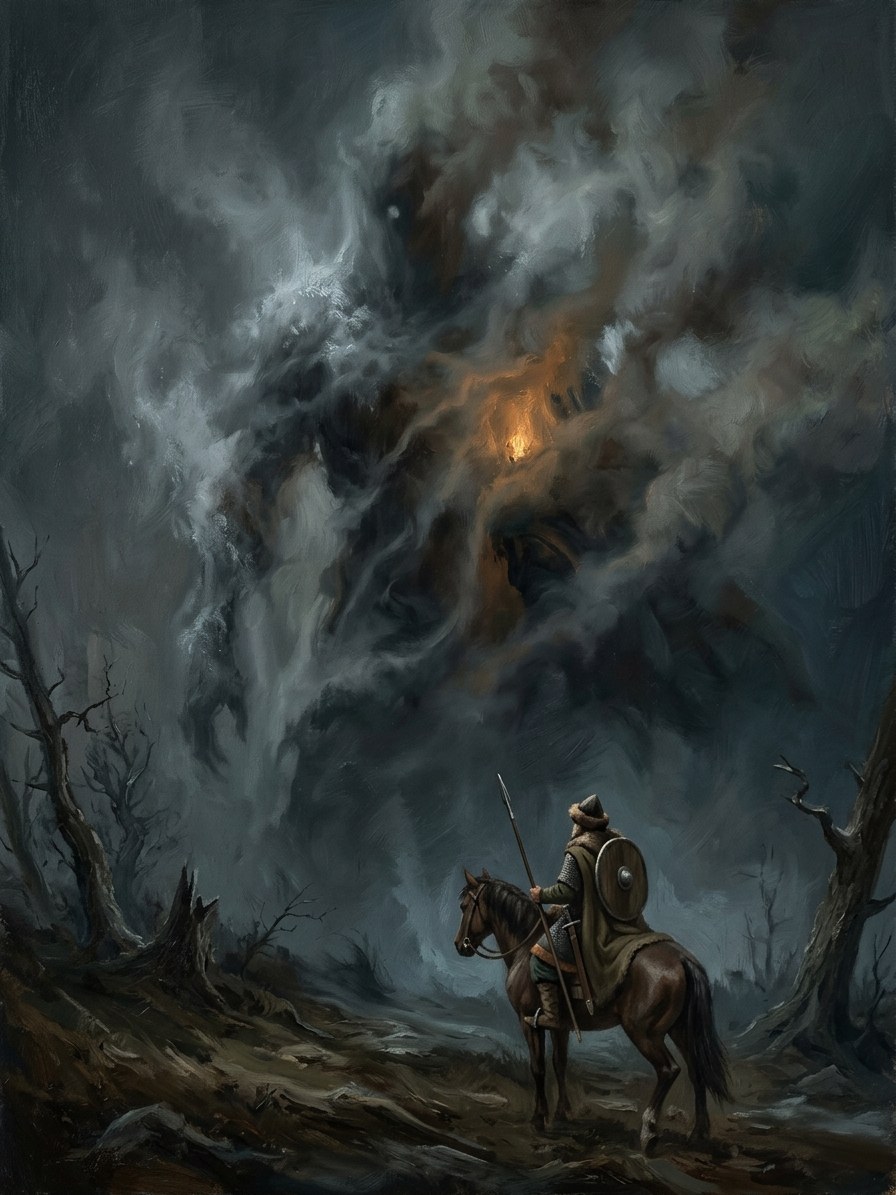
Geležinis Šventasis (Ferrum Sanctum) · force¶
Tipas |
galia |
Origin |
Egregoras (maitinamas institucijų) |
Pastaba |
Ferrum Sanctum: cold, relentless egregore of crusader conquest fed by the Teutonic Order. |
Wants¶
Total homogeneity: the wild and pagan as a sickness to be purged, the world made orderly and silent.
Takes (its price)¶
It grants fearlessness, tireless marching and absence of pity (the Iron Saint’s gift): knights with faces „of people who feel nothing“ (Book VI ch. 7). The price is pity, and such knights cannot weep.
Signs & manifestations¶
Furnace heat in winter; the smell of quench-water; crosses that ring like anvils; ice melting on shields; snow turning black and round where steel steps (Book VI ch. 24). „The breath of the Iron Saint“ along the Prussian border: metal, peat smoke, forests that stand silent as dead (Book I ch. 17). Marienburg’s cellars stay warm for a hundred years (Book III ch. 11, 22).
Vessels, servants, claims¶
Patron of the Order’s leaders: Zöllner (1382–90) and Jungingen (1407–10). Servants: the Reise riders and the Nedegintieji. Its oaths on relics bind the Order’s men.
Weaknesses¶
Earth’s Unmovable Will and Fire’s terror find no grip on its knights, but consecrated stone is its home ground, and Kalba costs double there. It is broken at Grunwald, when the white-cloaked knights lay down their swords and weep (Book III ch. 20, „Geležies Mirtis“), and „all that was warm in him went out with his god“ (Book V ch. 14).
Arc across the books¶
VI: first met at Strėva (1348, ch. 7) and Rudau (1370, ch. 24), where Kęstutis recognises its signs. I: Marienburg and Zöllner (ch. 17–18, 20). III: the warm cellars (ch. 11), the siege (ch. 22), its death at Grunwald (ch. 20). V: silenced in the North, among the dying Order (ch. 14).
Ryšiai
Antagonist of: III · The Green Wood — mythic, broken · VI · The Holy Forest (prequel) — mythic, grows
Fed by: Teutonic Order
Patron of: Iron Saint’s fearlessness · Konrad Zöllner von Rotenstein (1382–1390) · Ulrich von Jungingen (1407–1410)
Servants: Nedegintieji (the Unburned) · Reizos raiteliai (Riders of the Reise)
Nature Egregore (Layer II): institutional appetite wearing faith's clothes. The saga never judges the Christian God
Born of Crusade, the Reise season, indulgence and forced baptism, and thousands of prayers in the Marienburg church of the Virgin
Vessels Patron of the Order's leaders: Zöllner (1382-90) and Jungingen (1407-10). Servants: the Reise riders and the Nedegintieji
Wants Total homogeneity: the wild and pagan as a sickness to be purged, the world orderly and silent
Takes Pity. It grants fearlessness, tireless marching and absence of pity; such knights cannot weep
Signs Furnace heat in winter; the smell of quench-water; crosses that ring like anvils; ice melting on shields; snow blackening where steel steps; metal and peat smoke along the border
Weaknesses Earth's Unmovable Will and Fire's terror find no grip on its knights, but it can be broken: at Grunwald the white-cloaked knights lay down their swords and weep
Feast-day iron. Iron forged by a Christian smith on a holy day is tempered by appetite, not faith. The Iron Saint gathers in it, and whoever wields it is noticed.
Oaths on relics. Enforced among the Order's men. The Order distrusts converts who swore on pagan forms first.
Marienburg and the border. Consecrated stone is its home ground: Kalba costs double there and amber goes cold. The cellars of Marienburg stay warm for a hundred years.
When it is strongest. At the Reise, when thousands of prayers and marches are poured into one battle.
Book I. Marienburg and Zöllner (ch. 17-18, 20).
Book III. The warm cellars (ch. 11), the siege (ch. 22), its death at Grunwald (ch. 20, Geležies Mirtis).
Book V. Silenced in the North among the dying Order (ch. 14).
Book VI. First met at Strėva, 1348 (ch. 7), and Rudau, 1370 (ch. 24), where Kęstutis recognises its signs.
Sąsajos¶
graph LR
  book3["III · The Green Wood"]
  book6["VI · The Holy Forest (prequel)"]
  iron_gift["Iron Saint's fearlessness"]
  iron_saint["Geležinis Šventasis (Ferrum Sanctum)"]
  jungingen["Ulrich von Jungingen"]
  nedegintieji["Nedegintieji (the Unburned)"]
  reizos_raiteliai["Reizos raiteliai (Riders of the Reise)"]
  teutonic_order["Teutonic Order"]
  zollner["Konrad Zöllner von Rotenstein"]
  iron_saint -->|Fed by| teutonic_order
  iron_saint -->|Patron of| zollner
  iron_saint -->|Patron of| jungingen
  iron_saint -->|Patron of| iron_gift
  iron_saint -->|Antagonist of| book6
  iron_saint -->|Antagonist of| book3
  nedegintieji -->|Servant of| iron_saint
  reizos_raiteliai -->|Servant of| iron_saint
  style iron_saint stroke-width:3px