Vilkų krikštas (wolf-change)
What it is
Vilkų krikštas, the Wolves’ Baptism: granted power from the Root-Mother through the Dykra. It makes a man a vilkatas: night-sight, scent, sight of the dvasios, the Root-Mother’s healing and the berserk “iron hour”. It is not shape-change.
Vilkų krikštas (wolf-change)
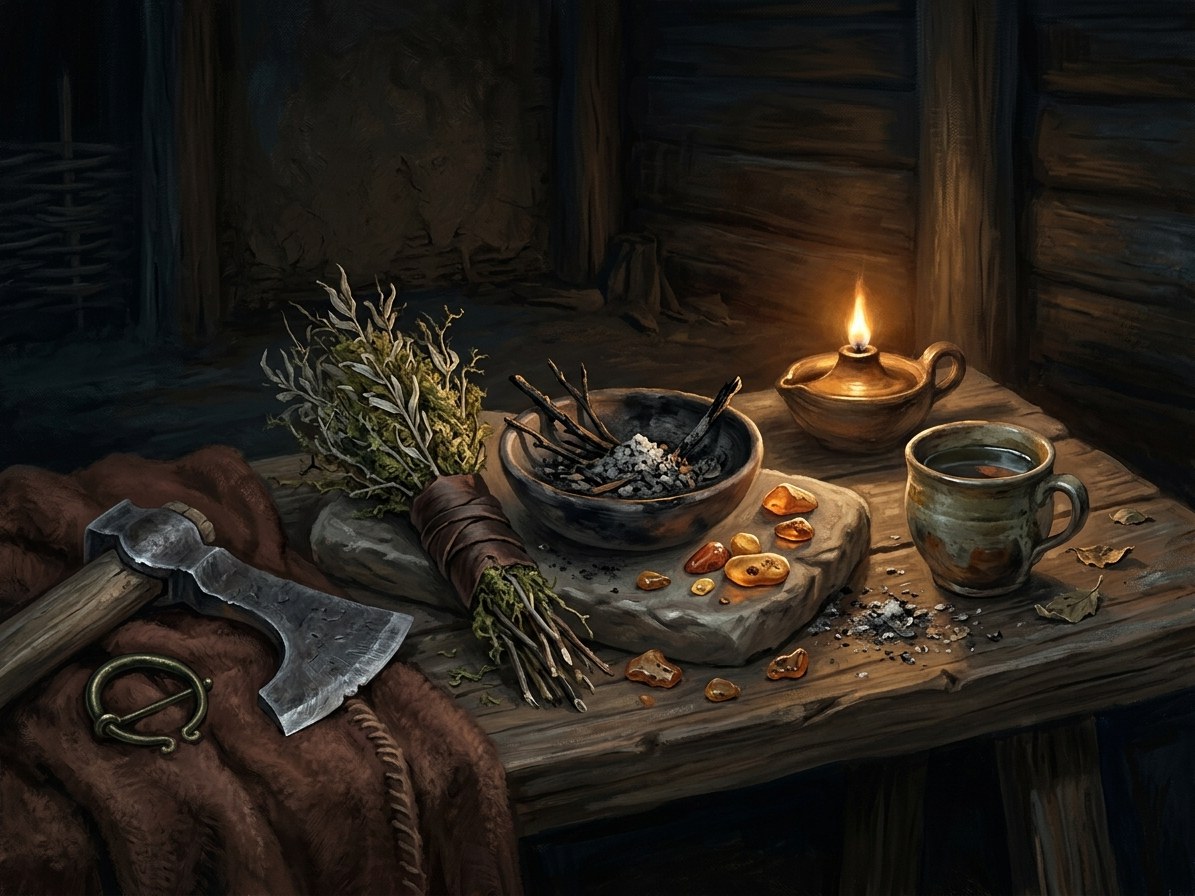
Vilkų krikštas (wolf-change) · school
Type |
school |
Family |
granted |
Note |
Vilkų krikštas: the shapeshifter’s rite granted by the Root-Mother. |
Who can use it (path & tier)
Unmarried men of 16 to 25, sponsored by a sworn wolf (his vilktėvis). Only wolves sworn twenty years or more (the Seniai) can put on the wolf; the folk belief that all vilkatai shape-shift is half wrong. Examples: Jonas (tier 3) and the Flame-Keeper Žiežirba (Book III ch. 9).
How it works (medium, words, timing)
Held in the twelve nights after Kūčios at a sacred flame: a wake as if he had died, his true name whispered to the fire, a throat-cut rubbed with live ash, nine nights without fire, then pressed under the mud of the oldest bog until the Root-Mother decides (“Kas neiškils, tas liks”, Book III ch. 9), and an oath on the Iron Wolf’s skull. Full rite: the Iron Wolves.
Costs
Taken: his true name, the road up (laid in the bog, never burned, never climbs to Dausos), his hearth, part of his soul, a little memory each iron hour, and his tears. Given: the pack, the sight, the iron hour. He can leave once, if someone who knew his true name speaks it at a living flame and offers bread on a knife-point (Book V ch. 29).
Limits & counters
No hearth under a roof; feast-day iron burns them; consecrated stone sickens them; the unfed dead hunt them. New wolves can be made only at a living flame, so the brotherhood ends when the last flame goes out in 1430. Bound by the Root-Mother’s nature, not the Three Laws.
Folk basis [Historical record]
[Historical record]. The wolf-warrior band is an Indo-European pattern (Männerbund, Old Norse úlfheðnar). Herodotus (4.105) has the Neuri becoming wolves for days each year; Olaus Magnus (1555) has werewolves gathering at Christmas in Prussia, Livonia and Lithuania. The Iron Wolf dream is a 16th-century chronicle legend.
Notable practitioners
Jonas; the Flame-Keeper; Šešiapirštis, wolf-father (Book II ch. 9); Pilkoji, taken “against all custom” after her village’s dead rise (Book III ch. 7, 9); Kęstutis’s silver wolf (Book VI ch. 5).
Relations
Patrons: Šaknų Motina (Root-Mother)
Practitioners: Jonas (vilkų vyresnysis) — tier 3 · Žiežirba (the Flame-Keeper, Book V POV) (1405–…) — tier 3
- School
- Granted power, bound by the Root-Mother's nature, not the Three Laws
- Tier
- Outside the practitioner tiers. Only the Seniai, twenty years sworn, can put on the wolf
- Casting
- The rite, held in the twelve nights after Kūčios: a wake as if he had died, his name whispered to the fire, a throat-mark rubbed with live ash, nine nights without fire, the drowning in the bog, the oath on the skull
- Components
- A sworn sponsor (the vilktėvis), a sacred flame, bog-iron belt and knife, the oldest bog, the Iron Wolf's skull. Unmarried men of 16 to 25
- Cost
- His true name, the road up (laid in the bog, never burned), his hearth, part of his soul, a little memory each iron hour, his tears
- Duration
- For life. New wolves can be made only at a living flame, so the brotherhood ends when the last flame goes out in 1430
- Limits
- No sleep under a lit roof; the iron hour (a battle-frenzy of about an hour) takes a memory each time; the Root-Mother's healing fails on feast-day iron
- Counters
- Feast-day iron; consecrated stone; the hungry dead, who are drawn to a wolf like moths to a lantern
The gifts. The sight of the dvasios, night-sight and scent, the Root-Mother's healing, cold and wet as nothing, pack-sense, the iron hour. It is not shape-change.
Half-wrong folk belief. Peasants think all vilkatai become wolves. Only the Seniai can put on the wolf.
Putting on the wolf. Real flesh, granted by the Root-Mother. Each time they come back less. The last time, they do not come back, and run into the Dykra on four feet.
Gediminid blood. Rule 2 of the Pack's Word: breaking it gives the wolf to the Root-Mother at once. He goes into the bog alive.
Lying on the skull. Every wolf in the Dykra hears it.
Leaving. Once, if someone who knew his true name speaks it at a living flame and offers bread on a knife-point. He loses every gift and ages the years in one winter.
Connections
graph LR
  flame_keeper["Žiežirba (the Flame-Keeper, Book V POV)"]
  jonas["Jonas (vilkų vyresnysis)"]
  root_mother["Šaknų Motina (Root-Mother)"]
  wolf_change["Vilkų krikštas (wolf-change)"]
  root_mother -->|Patron of| wolf_change
  jonas -->|Practises| wolf_change
  flame_keeper -->|Practises| wolf_change
  style wolf_change stroke-width:3px