Kuno von Liebenstein
Summary
Kuno von Liebenstein, komtur of Osterode and godfather of Danutė, is the Order’s informant who warned Kęstutis of the secret treaty of Dovydiškės in August 1381. He is named in Book I ch. 1.
Kuno von Liebenstein
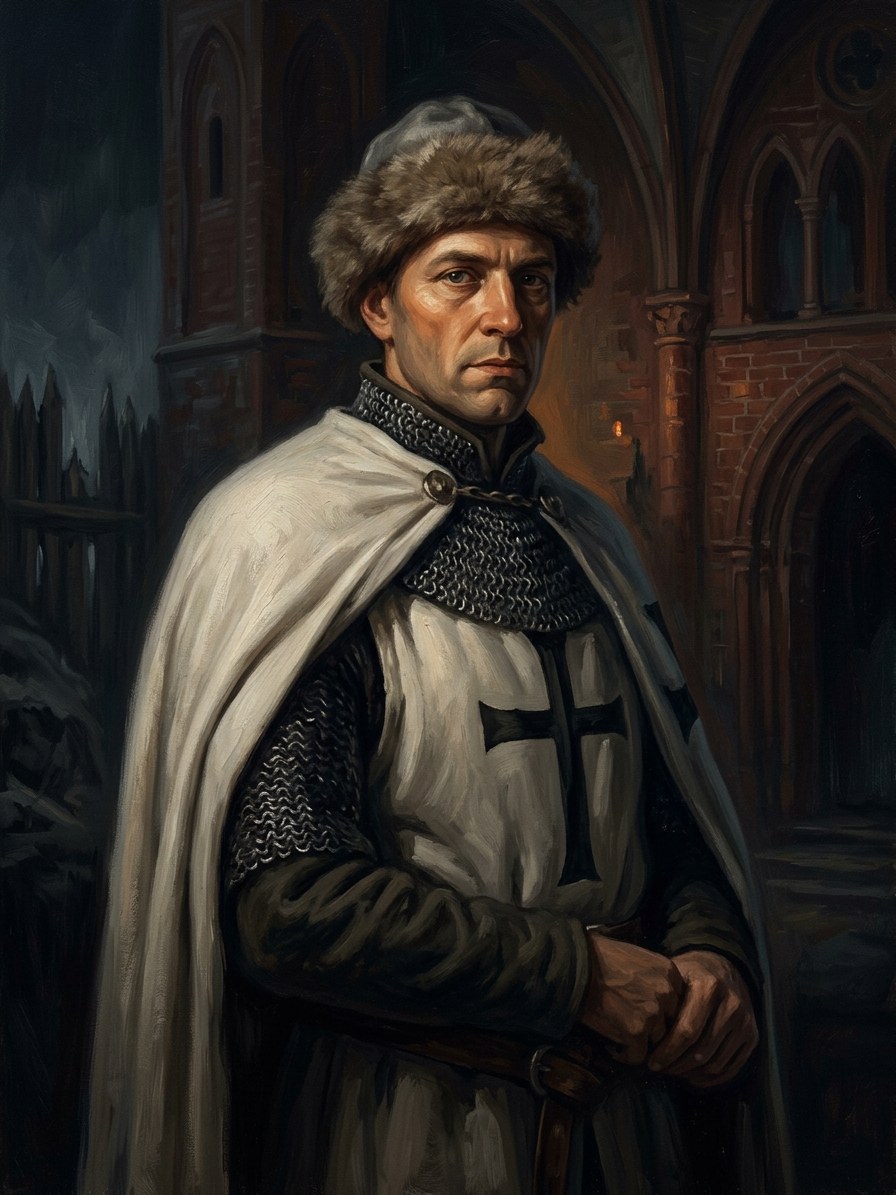
Kuno von Liebenstein · character
Type |
character |
Years |
?–? |
Status |
Historical record |
Note |
Komtur of Osterode, godfather of Danutė; the Order’s informant who warned Kęstutis of the Dovydiškės treaty in Aug 1381 (Ivinskis 1978, via en.wikipedia; VLE names no informant). Dates unknown. |
Appearance & tells
Not described: the books give him one sentence and no face. Book I ch. 1 names him as the komtur of Osterode who warned Kęstutis “in whispers” of the Dovydiškės treaty, and the saga leaves him there, an Order officer with a conscience whose entire role is a whisper in August 1381. His only “tell” is that he acts as a friend across the lines: as godfather to Kęstutis’s daughter Danutė (the record) he owes the family a loyalty that the Order’s rule does not recognise.
Want · Need · Lie · Truth
Want (external) |
(The books give no stated aims.) To protect his goddaughter’s family from a treachery he knew of, and to keep Kęstutis alive as a counterweight to Jogaila. |
Need (internal) |
To act on the Order’s word of honour or his godparent’s obligation: to decide where his loyalty lies. |
Lie they believe |
The Order’s secret deals are not his to reveal. |
Truth they learn (or refuse) |
He reveals one: Kęstutis learns the treaty of Dovydiškės and seizes Vilnius in autumn 1381. |
Arc by book
Book I (Aug 1381, ch. 1). Warns Kęstutis in a whisper of the secret treaty of Dovydiškės between Jogaila and the Order; on that warning Kęstutis takes Vilnius with three days’ ride, reads the treaty, and releases Jogaila, the mercy that kills him in 1382.
Book VI. Not on page: the afterword explains that the 1381 warning belongs to the historical Liebenstein, while the invented young brother Günther von Hohenstein, who admires Kęstutis in Book VI, is not the informant.
Power & magic
Tier 0; no powers and no role in the magic. Only a name and a warning.
Record vs saga
[Historical record]: Ivinskis (1978), followed by the English Wikipedia (Civil War 1381-84; Treaty of Dovydiškės): Kuno von Liebenstein, komtur of Osterode, in August 1381. VLE and Wigand name no informant, so the name is one of several versions. Not to be confused with Kuno von Lichtenstein, the Grand Commander killed at Grunwald.
[The saga’s invention]: Nothing beyond the warning; the saga keeps the historical informant and does not turn him into a character of the Book VI cast.
Pronunciation
LEE-ben-shtine · IPA /ˈliːbn̩ʃtaɪn/ · English sound-alike “LEE-ben-shtine”. German; the Lithuanian text writes Kuno fon Liebensteinas (KOO-no fon LEE-ben-shtine-ahs).
The informant is Liebenstein in Book I ch. 1; the real Osterode komtur, Günther von Hohenstein, died in 1380 and is not the man.
Appearances
Book I: ch. 1.
Book VI: the afterword.
Relations
Ally: Kęstutis (1381–1381) — The warning of Dovydiškės.
Member of: Teutonic Order
Took part in: Treaty of Dovydiškės — Informs Kęstutis of the treaty, Aug 1381.
Timeline
Year |
Event |
Book |
|---|---|---|
1380-05-31 |
I · The Wolf’s Exile |
Connections
graph LR
  ev_dovydiskes["Treaty of Dovydiškės"]
  kestutis["Kęstutis"]
  liebenstein["Kuno von Liebenstein"]
  teutonic_order["Teutonic Order"]
  liebenstein -->|Took part in| ev_dovydiskes
  liebenstein -->|Ally| kestutis
  liebenstein -->|Member of| teutonic_order
  style liebenstein stroke-width:3px