Kęsgailos (Kieżgajło)
House card
Seat |
Samogitia, where they were elders (seniūnai). [Historical record] |
Arms / sigil |
After Horodło, Zadora. [Historical record] |
Words |
None. |
Patron / burden |
None canonical; the Samogitian lords sit between the Root-Mother’s groves and the new Church. [The saga’s invention] |
Kęsgailos (Kieżgajło)
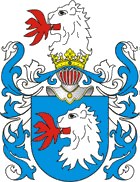
Kęsgailos (Kieżgajło) · house — Image: Tadeusz Gajl, CC BY-SA 3.0 via Wikimedia Commons

Type |
house |
Status |
Historical record |
Note |
Samogitian magnates; Mykolas Kęsgaila (d. 1450) was elder of Samogitia. |
Lineage
Mykolas Kęsgaila (Kieżgajło, d. 1450), son of Valimantas, was elder of Samogitia 1412–32, 1440–41 and 1443–50. His brothers the Valimantaičiai, among them Rumbaudas Valimantaitis, were Vytautas’s men in Samogitia c. 1409–11 and the bridge between Vilnius and the Samogitian assemblies. Kęsgaila was Švitrigaila’s man, imprisoned by Žygimantas after 1432 and restored in 1440. [Historical record]
Feuds & alliances
Servants of the Grand Duchy (GDL) and kin of the Samogitians. Opposed to Žygimantas; part of the council that made Casimir Grand Duke.
Fate across the books
III: The second Samogitian rising (1409) supplies the setting for ch. 12. Its village-elder POV is the fictional Dargis, not Rumbaudas Valimantaitis; the historical note distinguishes the real ducal representative.
IV: the Samogitian baptism (1413–17) and Melno (1422) fix the land’s fate.
V: the Kęsgailos are one of the council houses in ch. 17 and share in the power that unmakes Žygimantas. As the groves fall, the family is a man between two orders. [Historical record, saga framing]
Connections
graph LR
  gdl["Grand Duchy of Lithuania"]
  kesgailos["Kęsgailos (Kieżgajło)"]
  samogitians["Žemaičiai (Samogitians)"]
  kesgailos -->|Serves| gdl
  kesgailos -->|Member of| samogitians
  style kesgailos stroke-width:3px