Alkanosios vėlės (the hungry dead)¶
Folk source [Historical record]¶
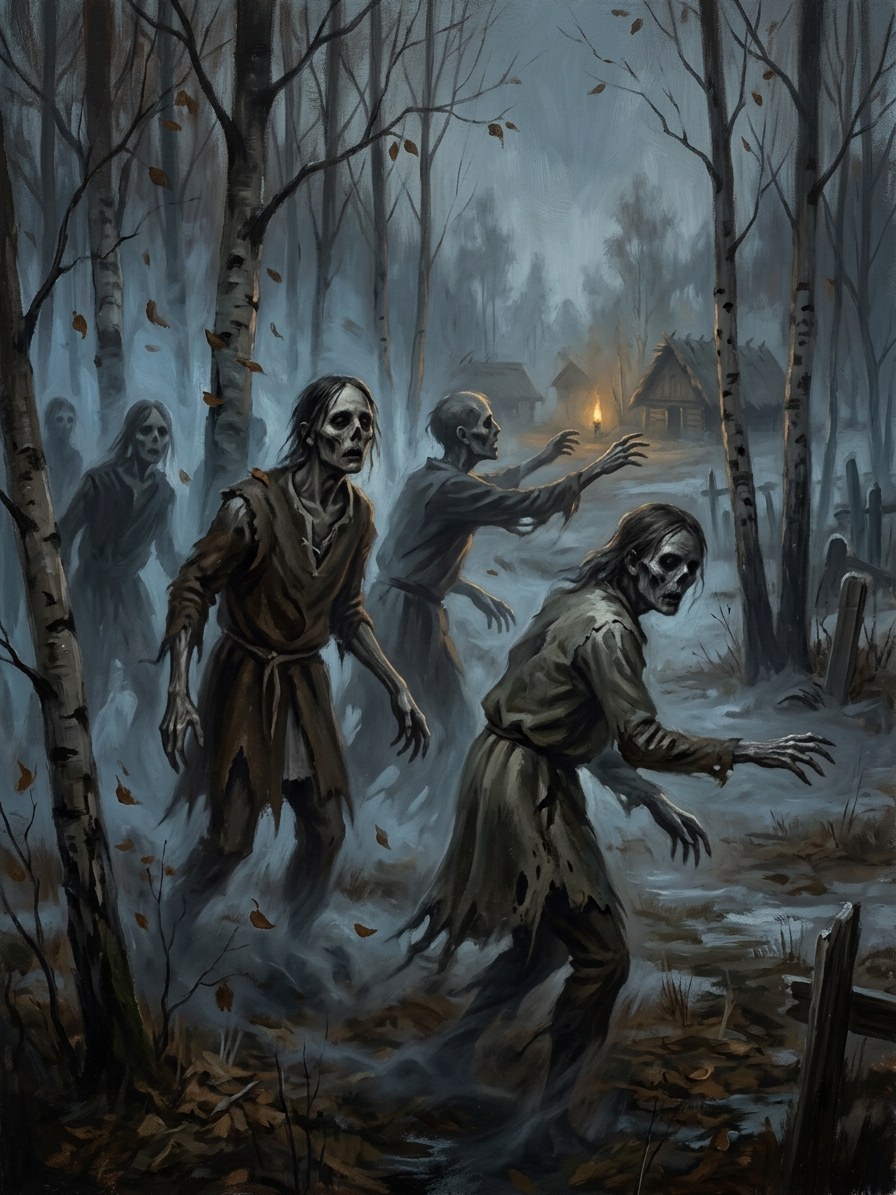
Folk tradition across the region knows dead who return because they were not properly mourned, buried or fed: suicides, the murdered, the drowned, those buried without rites. They wander, harm livestock and trouble the living until set right. Scattering seed (poppy and others) to keep the dead busy counting is reported across the Slavic and Baltic region.
Alkanosios vėlės (the hungry dead)
Alkanosios vėlės (the hungry dead) · creature¶
Type |
creature |
Status |
The saga’s invention |
Note |
Bestiary §16. Danger III → IV. |
In the saga (where the folk are half-wrong)¶
A vėlė no longer fed does not fade: it starves, and starving makes it a predator. It eats warmth first (cold houses), then memory (the living forget the dead person’s face), then life (the old and sick die in its presence). The worst are the unburned, the buried who cannot climb at all (see Nedegintieji).
Signs & habitat¶
Houses that will not stay warm; a family that cannot remember a grandmother’s name; cattle dead in the stall without a mark; graves in unconsecrated ground near abandoned groves.
Before / after the Unbinding¶
Before: rare (bad deaths only). After: legion; abandoned groves breed them. This is the saga’s central later-book threat.
Banes, wards, bargains, and their cost¶
Feed them late: bread, kisielius, beer on the grave and the name spoken (the priest asks why you feast on a grave). Poppy seed scattered on the path from the grave buys a night, not a cure. A ring of ash around the house, renewed nightly (live ash from a sacred flame is priceless after 1387). Burning the body is the only true cure, and after 1387 opening a grave and burning a corpse is a crime and a heresy.
Danger level¶
III dangerous → IV deadly.
Story hooks¶
Books II onward: the core of the wolves’ later trade. Book I: Kęstutis’s enemies leaving him unburned would have made him one, another reason the honoured cremation matters.
Relations
Shard of: Vėlės (the fed dead) — The same dead, no longer fed.
Shards: Nedegintieji (the Unburned) — Crusade dead buried in pits, hungry dead with the Iron Saint’s appetite.
Origin [Historical record] the unmourned, unburied or unfed dead who return, kept busy with scattered poppy seed · [The saga's invention] the same dead, no longer fed
Tier Revenant · the fed dead gone predator
Danger III dangerous → IV deadly
Habitat Unconsecrated graves near abandoned groves; cold houses
Wants Warmth, then memory, then life
Takes Warmth first, then the living's memory of the dead one's face, then life: the old and the sick die in its presence
Signs Houses that will not stay warm; a family that cannot remember a grandmother's name; cattle dead in the stall without a mark
Banes Burning the body (the only true cure); poppy seed; a ring of ash
Half-wrong truth. The folk say the dead return until set right. The truth: a vėlė no longer fed does not fade. It starves, and starving makes it a predator. The worst are the unburned, who cannot climb at all.
Legion. Rare before 1387 (bad deaths only). After it, abandoned groves breed them. This is the saga's central later-book threat.
Feeding. On warmth, then memory, then life.
Feeding them late. Bread, kisielius or beer on the grave and the name spoken. The priest asks why you are feasting on a grave.
Poppy seed. Scattered on the path from the grave; they must count it. Buys a night, not a cure.
The ash ring. Renewed nightly. Ordinary ash thins fast; live ash is priceless.
Burning the body. After 1387 a crime and a heresy, and someone always sees the smoke.
Connections¶
graph LR
  alkanosios_veles["Alkanosios vėlės (the hungry dead)"]
  nedegintieji["Nedegintieji (the Unburned)"]
  veles["Vėlės (the fed dead)"]
  alkanosios_veles -->|Shard of| veles
  nedegintieji -->|Shard of| alkanosios_veles
  style alkanosios_veles stroke-width:3px